
Community Wellbeing
Volunteering, Loneliness and Community Connection
How regular, respectful volunteering can support social participation and connection, and how employers and community organisations can work together.
Care to VolunteerPublished 16 October 20265 min read
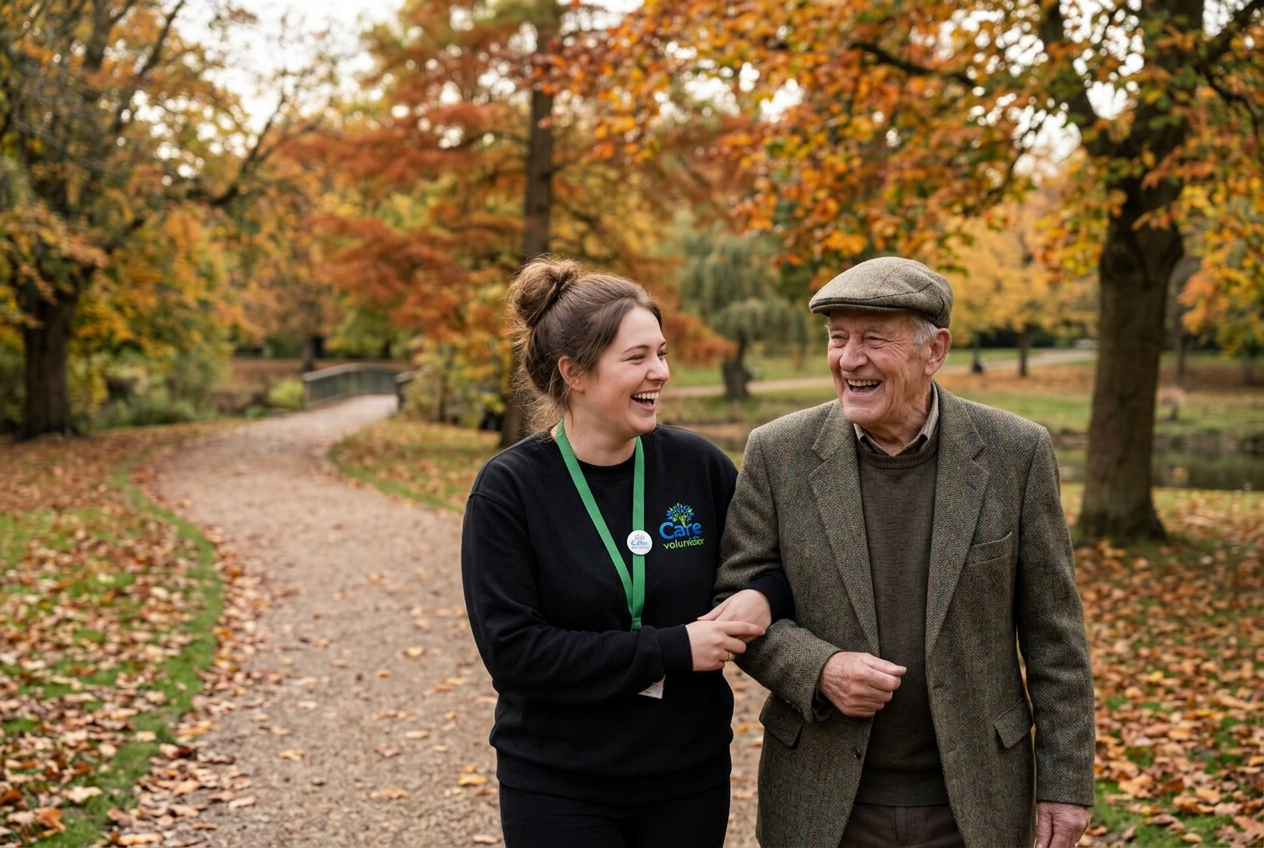
Loneliness is one of the quieter challenges facing communities across the UK. It can affect anyone, at any age, and it often goes unnoticed. Volunteering cannot solve it on its own, but regular, respectful human connection can play a meaningful part in helping people feel part of their community. This guide explores how employers, community organisations and volunteers can work together to create that kind of connection thoughtfully.
1. Understanding loneliness and social isolation
Loneliness and social isolation are related but different. Loneliness is a subjective feeling: the gap between the relationships someone has and the relationships they would like. Social isolation describes having few social contacts. A person can be surrounded by others and still feel lonely, or live alone and feel well connected.
The UK government has recognised loneliness as a public policy issue, publishing a national strategy, A connected society, in 2018 and continuing to measure loneliness through the Community Life Survey. The Office for National Statistics publishes recommended questions so that loneliness can be measured consistently.
Loneliness is often linked to life changes: bereavement, retirement, moving home, illness, becoming a carer or losing mobility. Recognising this helps us avoid assumptions. Not every older person is lonely, and many younger people are.
2. The role of regular human connection
Connection rarely comes from a single encounter. It grows through familiarity: seeing the same faces, being remembered, having something to look forward to. This is why regular, predictable activities, such as a weekly lunch club, a fortnightly visit or a monthly gardening group, often matter more than large one-off events.
For volunteers, this means that reliability is a form of kindness. Turning up when expected, remembering a conversation from last week and following through on small commitments build trust over time.
3. How volunteering can support social participation
Volunteering can support connection in several ways:
- Direct companionship: spending time in conversation, whether at a community venue, by telephone or, where properly arranged, through home visits.
- Enabling activities: helping a community group run more often or welcome more people, so that more residents can take part.
- Shared activity: working alongside residents on a garden, a craft session or a community event, where connection grows naturally from doing something together.
- Practical bridges: supporting someone to use video calls, find local groups or travel to activities, where this is within the agreed role.
Volunteering also benefits volunteers. Many people find that it gives them a stronger sense of belonging in their own community. That two-way exchange is part of what makes these relationships feel genuine.
4. Designing inclusive and respectful activities
Good activities are designed around the people they are meant to serve. Before planning, ask host organisations and, where possible, residents themselves what they would value. Consider:
- Accessibility: venues, transport, hearing loops, seating and timing.
- Choice: offering different ways to take part, from quiet conversation to group activities.
- Culture and language: whether activities feel welcoming to people of different backgrounds.
- Dignity: framing activities as shared community occasions rather than "help" for people in need.
Avoid activities that put residents on display or treat them as an audience for volunteers. The test is simple: would the people taking part describe it as something they enjoyed and chose?
5. Supporting older people without making assumptions
Older people are not a single group. They include people in their sixties who are working full time and people in their nineties who have lived in the same street for decades. Many are carers, volunteers and community leaders in their own right.
Volunteers should be encouraged to:
- ask rather than assume what someone would like to do or talk about;
- respect people's choices, including the choice not to take part;
- value people's experience and knowledge;
- avoid speaking over people or speaking to carers instead of the person themselves;
- maintain clear boundaries and refer any concerns to the host organisation.
Companionship volunteering is not a substitute for clinical care, social care or professional mental health support. If a volunteer is worried that someone needs more help than the activity can offer, the right step is to raise it with the host so that appropriate support can be considered.
6. Creating opportunities for intergenerational connection
Some of the most rewarding volunteering brings different generations together. Students helping with digital skills, young professionals joining a lunch club or families taking part in a community garden can create relationships that benefit everyone involved.
Intergenerational activities work best when they are built on mutual exchange. An older resident who teaches a volunteer to plant a vegetable bed is contributing as much as receiving. Designing activities so that everyone has something to offer helps avoid one-sided relationships.
Safeguarding should be considered carefully when activities involve both children and adults who may be at risk. Our safeguarding and volunteer readiness guide explains the main considerations.
7. Measuring changes in connection and wellbeing appropriately
It is natural to want evidence that volunteering helps reduce loneliness. Measurement should be gentle, proportionate and respectful.
- Use recognised questions, such as those recommended by the Office for National Statistics, rather than inventing your own.
- Ask questions over time rather than immediately after a single visit.
- Let host organisations lead on gathering feedback from the people they support, in ways that feel natural.
- Seek consent, protect privacy and be clear about how information will be used.
- Report what people said and what you observed, without claiming that volunteering alone caused any change.
Our guide to measuring the social value of volunteering covers these principles in more depth.
8. Building sustainable community relationships
Connection depends on continuity. If a volunteering programme starts enthusiastically and then fades, it can leave people feeling let down. Sustainable relationships need:
- realistic commitments that volunteers and hosts can maintain;
- clear arrangements for cover when volunteers are unavailable;
- support for volunteers, so they stay involved;
- careful endings where a relationship must close, with notice and, where possible, a handover.
How employers and community organisations can collaborate
Employers bring people, time and organisational capacity. Community organisations bring local knowledge, trusted relationships and an understanding of what residents need. When the two work together well, the result is something neither could achieve alone.
For employers, the most valuable contribution is often consistency: a reliable pattern of volunteering that a community organisation can plan around, with colleagues who are well prepared and supported to keep coming back. Volunteering leave, encouragement from managers and good coordination all make this possible.
For community organisations, a good employer partnership can extend what they offer, from opening an extra session each week to giving more people one-to-one time. Being clear about capacity, expectations and what support is needed helps the partnership last.
For both, the starting point is a conversation about what the community needs. Our guide to building strong community partnerships sets out how to begin.
This guide provides general information about volunteering and community connection. It is not medical, clinical or professional advice. Anyone concerned about their own wellbeing or someone else's should speak to a GP or an appropriate support service.
Sources
Explore how Care to Volunteer can support your organisation
We plan, coordinate and record employee volunteering as a managed service, working with community partners near you.
Related guides
01
The Complete Guide to Building an Employee Volunteering Programme
From defining your objectives and engaging employees to choosing community partners and demonstrating impact, this practical guide takes you through the essential stages of building a purposeful volunteering programme.
Getting Started6 min read
02
How to Build Strong Community Partnerships
How employers and community organisations can build volunteering partnerships founded on real needs, shared expectations and reliable delivery.
Partnerships5 min read
03
Safeguarding and Volunteer Readiness: A Practical Guide
Proportionate safeguarding for volunteering: assessing risk, understanding DBS eligibility, setting boundaries and knowing how to raise a concern.
Safeguarding7 min read