
Partnerships
How to Build Strong Community Partnerships
How employers and community organisations can build volunteering partnerships founded on real needs, shared expectations and reliable delivery.
Care to VolunteerPublished 16 October 20265 min read
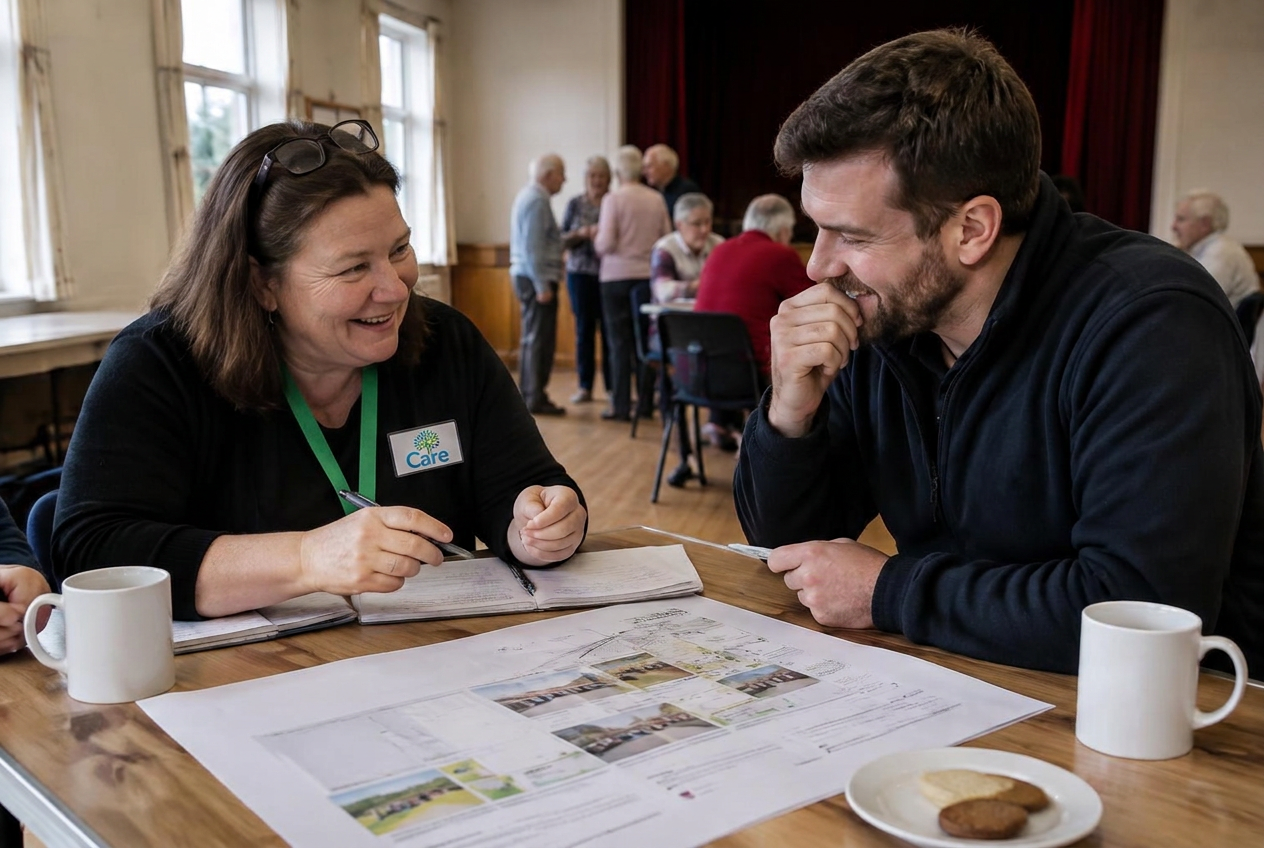
Employee volunteering depends on community organisations that are willing to open their doors. Some of the most valuable work happens in partnerships that have run quietly for years, built on trust, honest conversations and a clear understanding of what each side needs. This guide explains how to build that kind of relationship, whether you are an employer looking for partners or a community organisation considering hosting volunteers.
1. Understand community needs before designing activities
The strongest partnerships begin with listening. Before proposing a team day or a volunteering scheme, find out what local organisations are already doing, what pressures they face and where extra hands would genuinely help.
Useful sources include local councils for voluntary service, community foundations, council community teams, faith and neighbourhood groups and published local needs assessments. Conversations with frontline staff are often the most revealing: they will tell you whether the real gap is regular companionship, help at a lunch club, digital support or simply someone to manage a garden over the summer.
Resist the temptation to design an activity first and look for a host afterwards. An activity that suits the organisation's calendar but not the community's needs is unlikely to last.
2. Identify suitable organisations
Look for partners with a clear purpose, established relationships with the people they serve and the capacity to welcome volunteers. Size matters less than fit. A small community café with a committed coordinator may be a better partner than a large charity with no capacity to host.
Questions to explore early include:
- What is the organisation's purpose, and who does it serve?
- Has it hosted volunteers before, and what did it learn?
- Who would coordinate volunteers day to day?
- What policies does it have in place, particularly for safeguarding, health and safety and data protection?
- What insurance covers volunteer activity?
These are not hurdles to clear but the basis of a shared understanding. Good partners will welcome the questions.
3. Establish shared objectives and expectations
Once you have found a likely partner, agree what the partnership is for. Each side should be able to say, in a sentence or two, what it hopes to achieve and how it will know whether that is happening.
For example, a community organisation might hope to run its weekly lunch club with enough helpers to give members more one-to-one conversation. An employer might hope to offer colleagues a regular, meaningful local opportunity and to report participation and host feedback each quarter. Both objectives can be true at once, but they should be written down.
Be realistic about scale. It is better to agree a modest, reliable commitment, such as four volunteers every fortnight, than an ambitious one that cannot be sustained.
4. Agree roles, responsibilities and communication
Many partnership difficulties stem from assumptions about who does what. A short written agreement, even a simple one-page note, prevents most of them. It should cover:
- the activities volunteers will carry out, and what they will not do;
- who supervises volunteers on site;
- who recruits, briefs and books volunteers;
- how cancellations and changes will be communicated;
- how concerns, incidents and complaints will be handled;
- what information will be shared, and how personal data will be protected;
- any contribution towards coordination, materials or supervision costs.
Name a contact on each side and agree how often you will speak. A brief check-in each month is usually enough once the partnership is running.
5. Consider capacity, accessibility, safeguarding and risk
Hosting volunteers takes time. Someone has to greet them, explain the activity, supervise and follow up. If the host organisation is already stretched, an influx of volunteers can add pressure rather than relieve it. Agree volunteer numbers that the host can comfortably support, and discuss whether any contribution towards coordination is appropriate.
Think about accessibility from both directions. Are the activities and venues accessible to volunteers with different needs? And will the presence of volunteers affect the experience of the people the organisation supports?
Safeguarding should be proportionate to the activity and agreed before volunteering begins. The host organisation will normally lead on safeguarding for its own service users, but both partners share a responsibility to make sure volunteers are briefed, supervised and know how to raise concerns. Some roles may be eligible for criminal record checks, depending on the specific activities involved; many are not. Our safeguarding and volunteer readiness guide explains this further.
Carry out a simple risk assessment for each activity, covering practical matters such as manual handling, lone working, food hygiene and travel, as well as safeguarding.
6. Manage partnership delivery
Day-to-day reliability builds trust faster than anything else. Volunteers who arrive on time, briefed and ready to help will quickly become welcome; volunteers who cancel late or arrive unsure of what to do will soon become a burden.
Good practice in delivery includes:
- confirming bookings with the host in advance;
- sending volunteers a short brief before each activity;
- keeping attendance records that both partners can see;
- following up promptly on any concern or incident;
- thanking hosts as well as volunteers.
Where the partnership involves several sites or teams, a single point of coordination helps. Without it, hosts can find themselves fielding requests from several people at once.
7. Review results and build long-term relationships
Set a time, perhaps every six months, to review the partnership together. Discuss what has worked, what has been difficult and what each partner would change. Use records of participation and feedback from volunteers, hosts and, where appropriate, the people supported.
Honest reviews are a sign of a healthy partnership. If an activity is not working, it is better to adjust or pause than to continue out of habit. Equally, when something works well, consider how to deepen it: more regular visits, new skills-based roles or joint events that bring different parts of the community together.
Long-term partnerships also make evidence more meaningful. Outcomes such as stronger relationships, increased confidence and improved social connection take time to develop and are best understood over months, not single days.
Partnership planning checklist
- Community needs explored with local organisations
- Partner's purpose, capacity and policies understood
- Shared objectives agreed and written down
- Roles, supervision and communication arrangements confirmed
- Volunteer numbers agreed within the host's capacity
- Safeguarding and risk arrangements agreed for each activity
- Data sharing and confidentiality arrangements agreed
- Any contribution towards coordination costs discussed
- Named contacts and check-in schedule in place
- Review date agreed
Bringing it together
A community partnership is a relationship, not a transaction. When both organisations understand each other's purpose, share realistic expectations and communicate openly, volunteering becomes something the community values and returns to, rather than an occasional event.
To plan your partnership step by step, download the Community Partnership Planning Template, which includes a guide and an editable planning document.
This guide provides general information to help organisations plan community partnerships. It is not legal or professional advice.
Related resources
Explore how Care to Volunteer can support your organisation
We plan, coordinate and record employee volunteering as a managed service, working with community partners near you.
Related guides
01
The Complete Guide to Building an Employee Volunteering Programme
From defining your objectives and engaging employees to choosing community partners and demonstrating impact, this practical guide takes you through the essential stages of building a purposeful volunteering programme.
Getting Started6 min read
02
Safeguarding and Volunteer Readiness: A Practical Guide
Proportionate safeguarding for volunteering: assessing risk, understanding DBS eligibility, setting boundaries and knowing how to raise a concern.
Safeguarding7 min read
03
How to Measure the Social Value of Volunteering
A practical approach to evidencing the difference volunteering makes, from baselines and outcomes to honest reporting for commissioners and boards.
Social Value7 min read