
Safeguarding
Safeguarding and Volunteer Readiness: A Practical Guide
Proportionate safeguarding for volunteering: assessing risk, understanding DBS eligibility, setting boundaries and knowing how to raise a concern.
Care to VolunteerPublished 16 October 20267 min read
If someone is in immediate danger, call 999. If you are worried about an adult or child but there is no immediate danger, follow your organisation's safeguarding procedure and, where needed, contact the local council's adult or children's social care team.
Volunteering brings people together who might not otherwise meet: employees and older residents, students and families, community groups and businesses. That is its value. It also means that safeguarding, the work of protecting people's health, wellbeing and rights, needs to be part of how volunteering is planned from the start. This guide explains the main principles in practical terms. It is general information, not legal or professional safeguarding advice.
1. Why safeguarding matters in volunteering
Safeguarding is not only about preventing serious harm. It is about creating an environment in which everyone, including the people being supported and the volunteers themselves, is treated with dignity, feels safe and knows where to turn if something feels wrong.
For adults in England, the statutory guidance under the Care Act 2014 sets out six principles that are a helpful reference point for any organisation: empowerment, prevention, proportionality, protection, partnership and accountability. In practice, these mean involving people in decisions about their own lives, acting early, responding in a way that fits the level of risk, supporting those most in need of protection, working with local partners and being clear about who is responsible for what.
Responsibility for safeguarding sits with the organisations involved. Host organisations remain responsible for safeguarding the people who use their services, and employers retain responsibilities for their employees. A coordinating service such as Care to Volunteer can help organise briefings, records and communication, but it does not replace any organisation's statutory or professional safeguarding duties.
2. Assess activity-specific risks
Safeguarding should be proportionate. A group litter pick in a public park carries different considerations from regular one-to-one visits to someone's home. Start by describing the activity clearly and asking:
- Who will volunteers be in contact with, and are any of them likely to be at greater risk of harm?
- Will volunteers be alone with anyone, or always in a group or supervised setting?
- Will the activity take place in a public space, a community venue or a private home?
- Will volunteers handle money, personal information or medication? (In most volunteering roles they should not.)
- What could go wrong, and what simple steps would reduce the risk?
Record the answers in a short risk assessment and review it whenever the activity changes. Our Volunteer Safeguarding & Risk Assessment Checklist provides a structured starting point.
3. Understand role types and DBS checks
One of the most common misunderstandings in volunteering is that every role needs a DBS check. It does not. In England and Wales, the level of criminal record check an organisation may request depends on the specific activities a role involves, and eligibility is set out in law. Organisations cannot request a standard or enhanced check simply because they would like one.
In broad terms:
- A basic DBS check can be requested for any role and shows unspent convictions and conditional cautions.
- Standard and enhanced checks are only available where a role, or the activities within it, fall within specific legal criteria.
- An enhanced check with an adults' barred list check is available for roles that involve "regulated activity" with adults, as defined in legislation.
Regulated activity with adults includes, for example, providing health care or personal care, providing social work, helping someone with their cash, bills or shopping because of their age, illness or disability, helping with the conduct of their personal affairs and certain transport for health or care purposes. Some of these activities, such as shopping on someone's behalf, can arise in volunteering roles, so it is important to describe each role accurately and check it against the official guidance.
By contrast, many volunteering roles are non-regulated companionship or practical support: chatting over tea at a community café, helping at a lunch club, joining a gardening group or supporting a digital skills session in a supervised setting. These roles still need good safeguarding practice, but they do not usually make volunteers eligible for higher-level checks.
Volunteers should never provide personal care, such as help with washing, dressing, eating or medication, unless the role has been specifically designed, assessed and supported by a properly qualified organisation. Personal care is a distinct, regulated activity.
The Disclosure and Barring Service publishes eligibility guidance and an online eligibility tool on GOV.UK. Arrangements differ in Scotland, where Disclosure Scotland operates the PVG scheme, and in Northern Ireland, where checks are provided by AccessNI.
A criminal record check is only one part of suitability. References, a clear role description, induction, supervision and a culture in which concerns are taken seriously matter just as much.
4. Induction, supervision and boundaries
Every volunteer should receive a short induction before their first activity. It should explain the purpose of the activity, the volunteer's role and its limits, who supervises them and how to raise a concern.
Clear boundaries protect everyone. Typical boundaries for companionship and practical support roles include:
- not accepting gifts or money, or lending money;
- not sharing personal contact details or arranging to meet outside the activity;
- not taking photographs of people without clear consent and the host's agreement;
- not providing personal care, medical advice or financial help;
- not making promises about future visits or support that cannot be kept.
Supervision does not need to be formal. A named contact on site, a short check-in at the end of an activity and an easy way for volunteers to ask questions all help.
5. Respectful engagement with older and potentially vulnerable people
Respect means treating people as individuals with their own preferences, history and expertise, not as recipients of help. Avoid assumptions about what someone needs, can do or would like. Many older people are active members of their communities and may be volunteers themselves.
Practical guidance for volunteers includes:
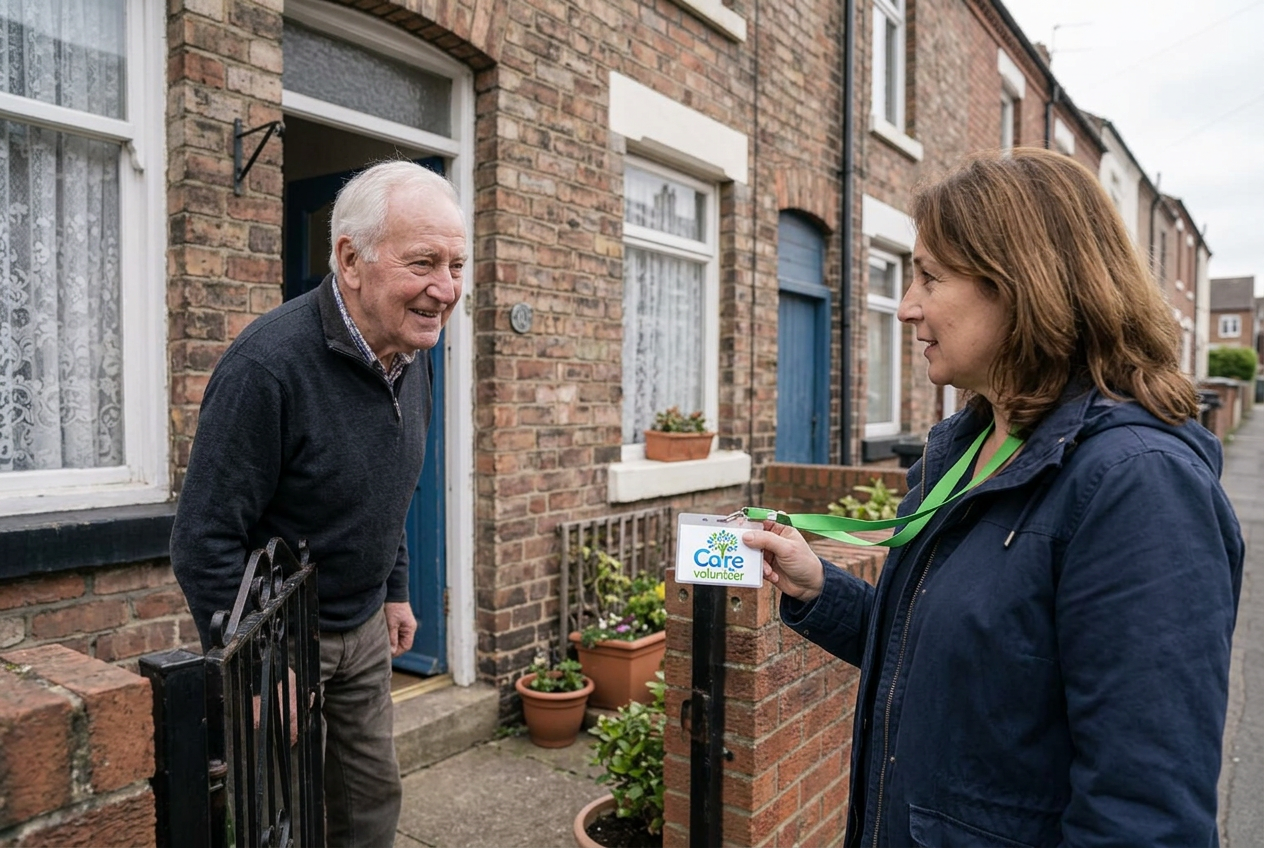
- introduce yourself clearly and explain why you are there;
- ask before helping, and accept "no thank you";
- listen more than you speak, and allow time for conversation;
- respect privacy and keep what you hear confidential, except where there is a safeguarding concern;
- be aware of hearing, sight or mobility needs without drawing unnecessary attention to them.
People have the right to make their own decisions, including ones others might disagree with. If you are worried about someone's wellbeing, raise it with the host rather than acting alone.
6. Recognise and report concerns
Volunteers are not expected to investigate, but they should know what might indicate a problem and what to do. Abuse and neglect can take many forms, including physical, emotional, financial, sexual and self-neglect. Signs might include unexplained injuries, sudden changes in mood or behaviour, unpaid bills or missing possessions, or someone appearing frightened of a particular person.
If a volunteer has a concern, they should:
- stay calm and listen without asking leading questions;
- not promise to keep a secret;
- write down what they saw or heard, in the person's own words where possible, with the date and time;
- report it promptly to the host's named safeguarding contact, following the agreed procedure;
- call 999 if someone is in immediate danger.
Concerns about children should be reported in the same way and, where appropriate, to the local council's children's services.
7. Manage incidents and escalation
Every partnership should agree in advance how incidents and concerns will be handled. This includes who is told, how quickly, who records the matter and who decides whether to refer to the local authority or police. The host organisation will usually lead on concerns relating to its service users; employers will lead on concerns about their employees' conduct.
Records should be factual, stored securely and shared only with those who need to know, in line with data protection law. After any incident, offer volunteers support; witnessing a distressing situation can affect people more than they expect.
8. Review and improve safeguarding arrangements
Safeguarding arrangements should be reviewed at least annually and whenever an activity, venue or partner changes. Use feedback from volunteers and hosts, any concerns raised and changes in official guidance to keep arrangements current. Small improvements, such as a clearer briefing or a better process for confirming who is on site, often make the most difference.
Safeguarding readiness summary
- Each activity described clearly, with a proportionate risk assessment
- Each role checked against official DBS eligibility guidance
- No volunteer provides personal care or financial help outside a properly designed role
- Induction covers role boundaries and how to raise a concern
- Named safeguarding contact confirmed for each host
- Reporting and escalation route agreed by all partners
- Records stored securely and shared appropriately
- Arrangements reviewed at least annually
Bringing it together
Good safeguarding makes volunteering possible rather than difficult. When roles are clearly defined, volunteers are well prepared and every partner understands their responsibilities, people can come together with confidence. You can read more about how we approach these responsibilities on our Governance & Trust page.
This guide provides general information only. It is not a substitute for legal advice or professional safeguarding advice, or for your organisation's own safeguarding policy and procedures. Always refer to current official guidance and your local safeguarding arrangements.
Related resources
Sources
- Regulated activity with adults in England and Wales, Disclosure and Barring Service, GOV.UK
- DBS eligibility guidance, Disclosure and Barring Service, GOV.UK
- Care and support statutory guidance (Care Act 2014), Department of Health and Social Care, GOV.UK
- PVG scheme, Disclosure Scotland, mygov.scot
- AccessNI criminal record checks, nidirect
Explore how Care to Volunteer can support your organisation
We plan, coordinate and record employee volunteering as a managed service, working with community partners near you.
Related guides
01
The Complete Guide to Building an Employee Volunteering Programme
From defining your objectives and engaging employees to choosing community partners and demonstrating impact, this practical guide takes you through the essential stages of building a purposeful volunteering programme.
Getting Started6 min read
02
How to Build Strong Community Partnerships
How employers and community organisations can build volunteering partnerships founded on real needs, shared expectations and reliable delivery.
Partnerships5 min read
03
How to Measure the Social Value of Volunteering
A practical approach to evidencing the difference volunteering makes, from baselines and outcomes to honest reporting for commissioners and boards.
Social Value7 min read