
Article
The Hidden Cost of Loneliness: Why Human Connection Matters
Loneliness is not always visible. Behind closed doors, in busy neighbourhoods and sometimes even in crowded workplaces, people can experience a profound absence of meaningful human connection. Understanding that experience is the first step towards building more connected communities.
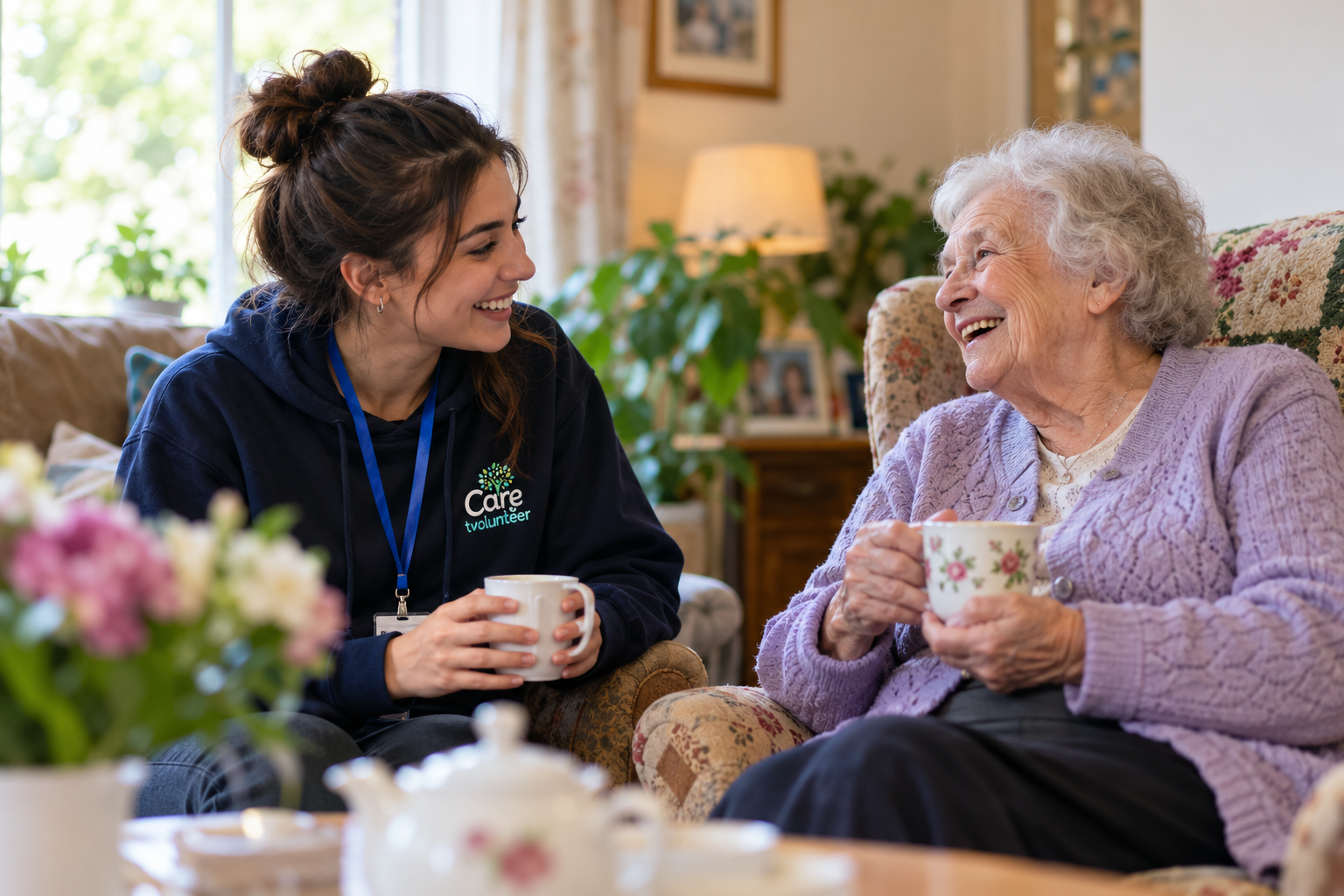
The loneliness we don't always see
Imagine an older gentleman living in the same house he has occupied for forty years.
He knows every corner of it. The family photographs remain on the mantelpiece. The garden still needs tending. The television provides a familiar background sound.
But the house has become quieter.
His children live elsewhere. Friends have moved away or passed on. The conversations that once filled his days have gradually become less frequent.
He may exchange a few words with a shop assistant or greet a neighbour occasionally. Yet there are days when nobody sits down and genuinely asks how he is.
This is an illustrative scenario, but the circumstances it describes are familiar in communities across Britain.
Loneliness does not necessarily mean having nobody around. It is the experience of feeling that our social relationships are not meeting our needs. Someone can live alone and feel contentedly connected, while another person can be surrounded by people and still feel profoundly isolated.
That distinction matters because addressing loneliness requires more than simply increasing the number of interactions people have. It requires opportunities for relationships that feel genuine, respectful and meaningful.
Why human connection matters
Human beings are social by nature. Throughout our lives, relationships influence our sense of belonging, confidence, identity and emotional wellbeing.
A familiar face can bring reassurance. A thoughtful conversation can make someone feel heard. Sharing an activity can create a sense of participation that extends beyond the activity itself.
When those opportunities become limited, everyday life can begin to feel smaller.
The effects of loneliness are not confined to older people. Young adults moving to unfamiliar cities, parents adjusting to new responsibilities, people experiencing bereavement, individuals living with disabilities and those navigating major life transitions may all experience social disconnection.
Research has associated persistent loneliness and social isolation with poorer mental and physical health outcomes. However, loneliness is complex, and the circumstances of each individual matter. No single activity or intervention can be assumed to resolve it.
What communities can do is create more opportunities for people to meet, participate and develop meaningful relationships.
That is where thoughtfully organised volunteering can make a contribution.
The extraordinary value of ordinary moments
When organisations discuss volunteering, attention often turns to hours contributed, projects completed and the number of people participating.
These measures are useful. They demonstrate that people have given their time and that activities have taken place.
But consider what an hour might actually contain.
A volunteer visits an older resident. They make tea, talk about a favourite film and discover that they both enjoy gardening. The conversation moves naturally from one subject to another. Before leaving, they discuss the possibility of another visit.
On a reporting dashboard, this might appear as one completed activity and one hour of volunteering.
For the individuals involved, it could represent something much more personal: a welcome interruption to a quiet afternoon, an opportunity to share memories or the beginning of a new connection.
The value lies not simply in the time recorded, but in the quality of the interaction.
Of course, not every visit leads to a friendship, and not every person wants the same kind of companionship. Some may prefer group activities, others practical assistance, and others occasional conversation.
Meaningful volunteering begins by recognising those differences.
Volunteering should respond to people, not just programmes
A successful community initiative cannot be measured solely by how many volunteers are available.
It must also consider whether their contribution is appropriate, wanted and genuinely useful.
For example, an older resident may welcome a regular conversation but have no interest in participating in a large community event. Another person may prefer assistance with digital technology because it enables them to communicate more easily with family.
A third may enjoy joining a local gardening project, where shared activity creates natural opportunities for conversation.
These are different circumstances requiring different approaches.
Community organisations, local authorities and care-related services can play an important role in identifying suitable opportunities, understanding individual preferences and establishing appropriate safeguarding arrangements.
Employers can contribute by encouraging their people to participate and making time available for volunteering.
The challenge is bringing these different contributions together in a way that is coordinated, responsible and sustainable.
A different opportunity for employers
For many businesses, corporate volunteering has traditionally meant organising an occasional team day.
Employees might spend an afternoon improving a community garden, supporting a charity event or taking part in a neighbourhood initiative.
These activities can be worthwhile, particularly when they respond to genuine community needs.
But organisations can also think more broadly about the contribution their people could make.
What if employee volunteering became an ongoing opportunity for meaningful community participation rather than an isolated event?
What if people could discover suitable activities that matched their interests, skills and availability?
And what if employers could understand not only how many hours had been contributed, but also the nature of the activities delivered and the communities reached?
A more structured approach can make volunteering easier to coordinate, more accessible to participants and more useful to community partners.
It can also create opportunities for employees themselves to develop new perspectives, relationships and a stronger connection with the communities around them.
These benefits should not be treated as automatic. Their significance depends on the quality of the programme and the experiences of those involved.
The importance of coordination and trust
Volunteering involving older residents or people who may be vulnerable requires particular care.
Good intentions alone are not enough.
Suitable opportunities need to be identified. Volunteers may require appropriate guidance, screening or supervision. The preferences and consent of individuals receiving support must be respected.
There should also be clear arrangements for communication, safeguarding concerns and the responsibilities of participating organisations.
A coordinated approach allows volunteering to develop within these boundaries rather than relying on informal goodwill alone.
This is particularly important when employers, community organisations and local authorities are working together.
Each brings different resources and responsibilities. Effective collaboration requires clarity about who is responsible for what.
Measuring contribution without losing the human story
One of the challenges in social-value reporting is that human experiences cannot always be reduced to monetary figures.
Volunteering hours can be recorded. Completed activities can be confirmed. Participation levels can be monitored.
These records provide a useful foundation for accountability.
But demonstrating an improvement in wellbeing, reduced loneliness or stronger social connection requires additional evidence and an appropriate assessment method.
An activity taking place is not, by itself, proof that a particular outcome has been achieved.
Responsible reporting should distinguish between what was delivered, what participants experienced and what can reasonably be concluded about the results.
For employers and public-sector organisations, this distinction is increasingly important. Credible reporting should communicate the significance of a contribution without exaggerating what the evidence demonstrates.
The strongest approach brings together clear activity records, appropriate feedback and a genuine understanding of the people involved.
Where Care to Volunteer fits in
Care to Volunteer was developed around a simple belief: giving time should be meaningful for the person volunteering and the person receiving that contribution.
Our approach is designed to connect organisations, volunteers and community opportunities through coordinated delivery supported by technology.
For employers, this means a more structured route into community participation, with less of the administrative complexity associated with organising programmes independently.
For volunteers, it means opportunities to contribute their time and abilities in ways that reflect their interests and circumstances.
For participating community organisations and local authorities, the intended model creates a framework through which suitable opportunities can be identified, responsibilities agreed and relevant activity evidence recorded.
Care to Volunteer also aims to make contribution more visible through structured participation and social-value reporting, while recognising that meaningful human outcomes require appropriate evidence.
Technology has an important role in making this possible. But it is not the purpose of volunteering.
People are.
A more connected community begins with small actions
Loneliness is not a challenge that any single organisation, technology platform or volunteering programme can solve.
It requires a wider commitment to understanding people, strengthening relationships and creating communities where individuals have opportunities to feel included.
That commitment does not always begin with a major initiative.
Sometimes, it begins with someone choosing to give an hour of their time.
A conversation. A shared walk. An introduction to something new. A familiar face returning the following week.
Small moments cannot solve every difficulty, but they can become part of something meaningful.
And when those moments are supported by responsible coordination, committed organisations and genuine community understanding, they have the potential to contribute to a more connected society.
Because sometimes, the most valuable thing we can give another person is simply our time.
References
- Community Wellbeing
- Loneliness
- Human Connection
- Employee Volunteering
- Social Value
Bring coordinated volunteering to your organisation
Care to Volunteer runs employee volunteering as a managed service, from the first invitation to the final report.
Related Insights

Article
Beyond the Volunteering Day: Rethinking Corporate Social Responsibility
Why corporate volunteering should go beyond the annual team day, and how structured programmes create lasting community connection.
13 October 20264 min read

Article
From CSR Spending to Measurable Social Value: What Businesses Need to Know
Businesses are increasingly expected to show what their contribution achieves, not just what it costs. Here is what that means for CSR, social value and reporting.
13 October 20265 min read